Embracing Introversion: How to Thrive in a World That Favors Extroverts
Throughout my childhood, I don’t recall having more than one close friend at any given time; I just wasn’t very good with people. I rarely found myself in any kind of group setting outside of school and was often absorbed in my own thoughts.
My weekends were spent at home, playing with my brother or reading alone.
I thought that my being an introvert necessarily meant that I did not enjoy the company of others. I manifested this conclusion in a kind of stoicism – a nonchalant aloofness and a rejection of company. But I was also lonely. Although I stubbornly refused to acknowledge it, there were times when I felt desperate for human connection. It seemed so confusing and paradoxical to me: introverts were supposed to like being alone.
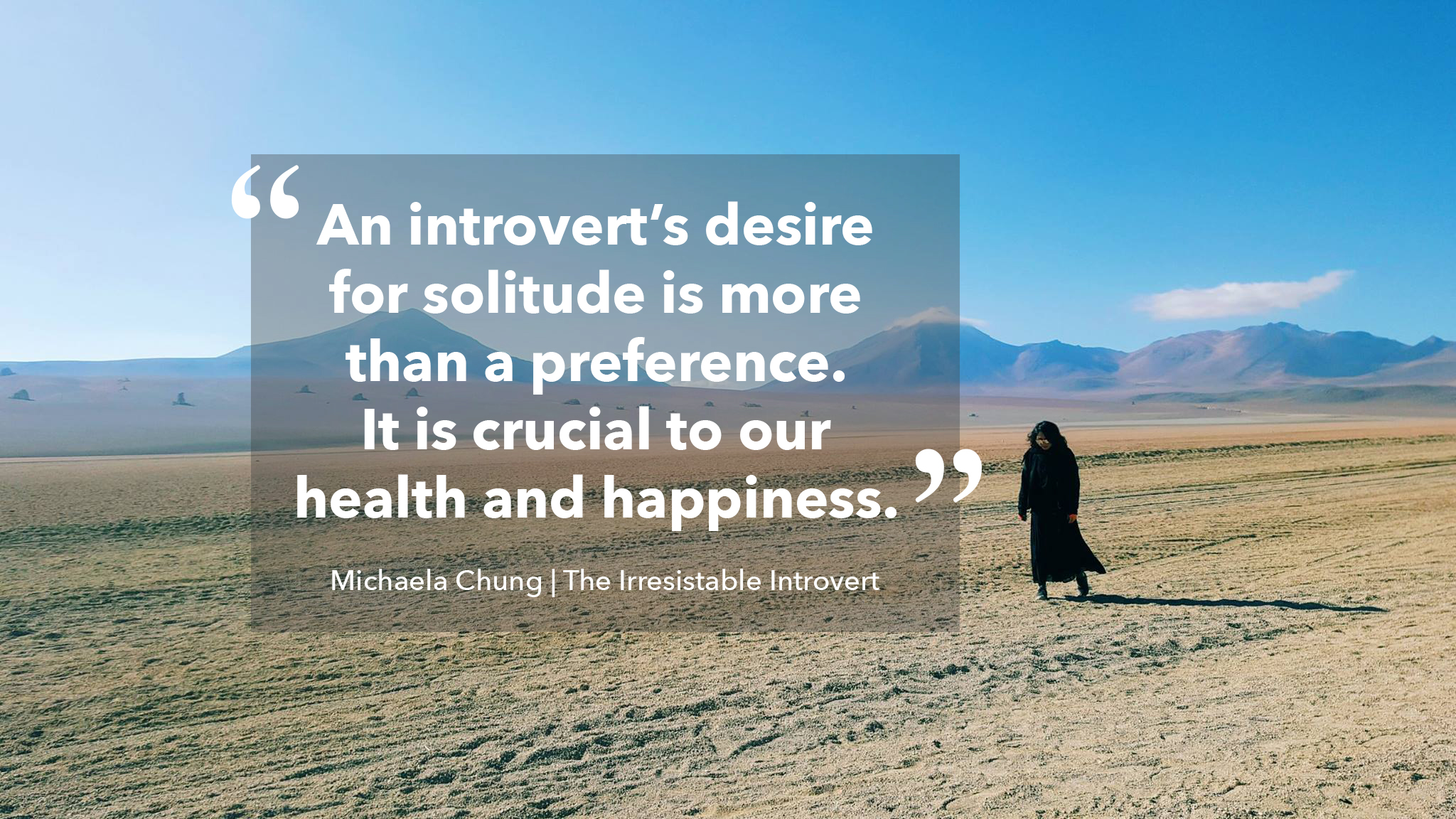
It turns out, that’s not at all what introverts are “supposed” to like at all. Being introverted isn’t about hating people – it is formally defined by the direction of energy when you interact with others. More specifically, introverts expend energy when they are around people, and they recharge in their time alone. The reverse holds true for extroverts.
More importantly, introvert-extrovert designations are less of a dichotomy and more of a continuum; every individual moves along this spectrum, and is not bound by a singularly determined, innate predisposition. This was a fairly obvious, but recent, epiphany for me – something that I had not realized until it was pointed out to me explicitly.
In considering all of this, it didn’t escape me that modern cultures seem to favor an “Extrovert Ideal,” encouraging brazen declarations of self-confidence. Sometimes I felt like I was born as a mildly defective human being.
Late in my sophomore year of college, I decided to try something different; I joined a handful of clubs, struck up conversation with strangers, and filled up my calendar with social events. To be honest, the experience was uncomfortable, stressful, embarrassing, and frustrating. But as a result of my little experiment, I learned just how emotionally unintelligent I was.
In hindsight, the approach I took was not kind to my emotional well-being. However, the point I wish to make here is that I made a crucial discovery: through practice, I could learn how to become better, maybe even good, at connecting with people – this was a skill that I could acquire. Of course, there are those who are born with a natural charisma and magnetism, and I certainly did not fit that mould. But I could defy the shy and timid personality that characterized my younger years, and be rewarded with the satisfaction of breaking free from this box that I had built for myself.
I wasn’t necessarily trying to become an extrovert; I was simply training and refining the social skills that I already possessed.
For those that know me today, I daresay that I come off as a fairly well-adjusted and outgoing young adult: I’m passionate about building community, thrive in good company, and am borderline garrulous around strangers. But I am no less of an introvert for it.
I’ll take this wonderful opportunity to say the following: introverts come in all shapes and sizes, and we may not always appear shy and reserved. Like extroverts, we strive to do well in a hyperconnected society and workplace. We don’t need special treatment, but there may be times when we need you to understand our idiosyncrasies; if we retreat to recharge, don’t worry, we’ll be back.
To those that might be feeling overwhelmed by the pressures to “keep up” with society, I assure you that there is always room to gain social experience at your own pace, and on your own terms. However, it’s important to communicate to those around you that alone time is an important part of your self-care, and to be respectful of their expectations.
The prospect of missing out on valuable opportunities and social events can be really scary, but please understand that you don’t need to be a part of everything in order to have all the resources you need to be successful. Don’t push yourself so hard that you lose time for the things that energize you. Being an introvert doesn’t shortchange or disadvantage you; there are many ways that you can work within your comfort zone and still flourish. It all starts with an honest comprehension of who you are, and a willingness to meet yourself where you currently stand.
What else can we do to empower introverts in society and in the workplace?
This post is written by Pei Choong, SparkVision Intern, brand aficionado and a self-described introvert.