Cameron Pollock is the first full-time SparkVision employee and is joining us as the Director of Research.
He came to us through the Baltimore Corps fellowship program and will be leading our “High Achieving Millennial Research Project” which is looking at the conditions in which young professionals thrive. We look forward to transforming the research into a robust blog and podcast series that will be coming shortly!
Tell me about yourself. How did you come to sitting across the table from me today?
I’m from Pennsylvania and lived a pretty standard suburban life. As a college student, I went to Temple University and studied Neuroscience. I wanted to get into the hard science aspect of psychology and understand how the brain connected with the mind.
I moved to Baltimore in 2013 and was a research assistant in a lab at University of Maryland, Baltimore. It was a only a one year job because my boss had accepted another position. I spent that whole year knowing I had a deadline to have to make my next decision.
I originally wanted to go WWOOFing all around the world. It’s the “Worldwide Organization of Organic Farmers”. It’s kind of like CouchSurfing but on farms. The farmers give you housing and food in exchange for work.
So did you do it?
No, I didn’t actually do it. The flight to New Zealand was too expensive and I chose to take the safe route – I got another research assistant job. I still had a lot of exploration of the research field to do.
I worked at the Lieber Institute for Brain Development. There’s “industry” and “academic” science. The Lieber Institute bridges the gap between the two. In science there’s a lot of pressure to get a PhD. I loved a lot about working in a lab, but didn’t love at lot of other things. Like how it takes control of your life.
When you say it totally took over your life, what do you mean?
It’s just the nature of the work. In a lab, in research, there is never meaningless work. You have to create meaningful work to answer the questions you’re asking. There’s always something more you can be doing to get there.
What were you working on?
Both labs were related to schizophrenia. We were studying one pathway in the brain. We would disrupt this pathway in the beginning of an animal’s life and then see the effects, and how to reverse them.
In the second lab we were taking a look at the developmental aspects of schizophrenia. We studied one specific chemical that’s involved in the growth of your brain cells, and the maintenance of their health. It’s also involved in memory formation. We were studying this chemical as it relates to schizophrenia and other diseases.
That’s so intense! Such different work than what we’re going to be doing.
Yeah, I was doing intense stuff but wasn’t fulfilled. I’d be doing a procedure with a mouse in a dark back room thinking, “I don’t think I want to do this forever…there’s so much more out there.”
I wanted to explore medical school and clinical sciences because I felt like working with patients would be fulfilling. I got interested in public health more seriously. I really care about social issues with behavior and people. In the meantime, I worked with kids in an elementary school.
I applied for a Baltimore Corps fellowship. I’m lucky to be here at SparkVision because I’m going to be working on social research, professional development and understanding millennials more deeply. I’m looking forward to understanding myself better from the research and to be a part of the great mission you’ve created here.
How do you feel your past experience is going to serve you in our work?
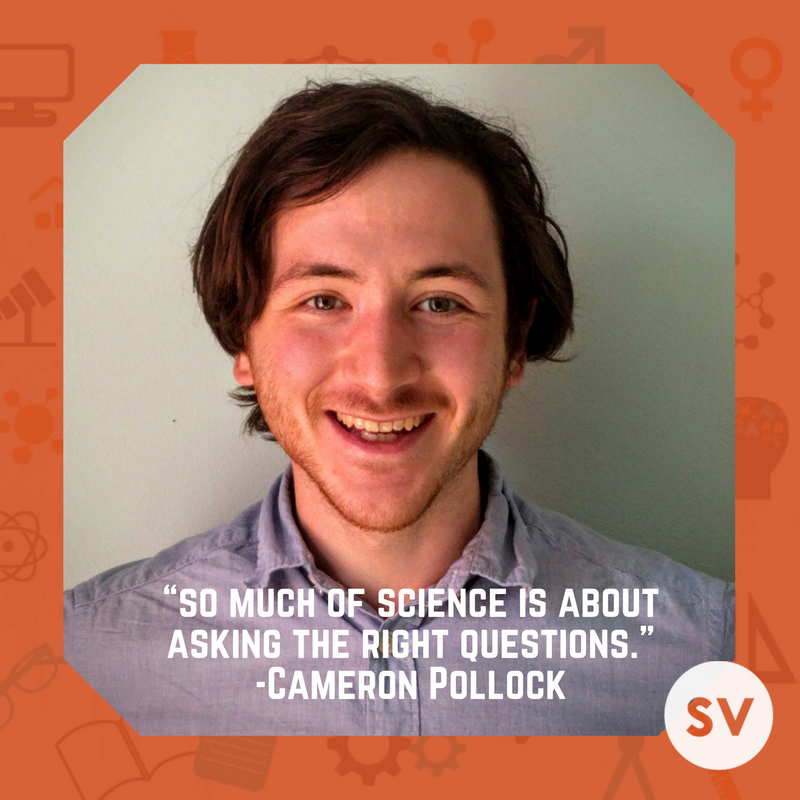
I bring a sense of critical feedback and evaluation. One of the most transferable skills is critical inquiry – getting to the bottom of issues, problems, and questions. I’m really interested in interviewing people. So much of science is about asking the right questions.
What’s going to be the best growth opportunity for you here? What will be different in a year?
Relating my scientific skills to human beings. Getting the feel for different types of people. I’m going to be meeting hundreds of people and that’s pretty new for me. I’m looking forward to developing my emotional intelligence skills. I’m hoping to become a more positive person. I want to leave a conversation and have people feel good afterwards.
I think this work will affect a lot of people and become a model for others to use. I hope it’ll change how people do business in their daily lives.