I recently had the opportunity to see my middle school son perform in a production of the musical play, The Wizard of Oz.
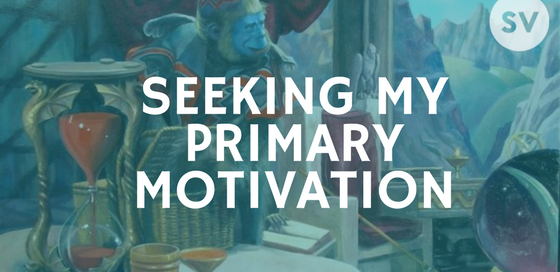
One of the classic scenes from the movie and the play was when the witch turned the hourglass and told Dorothy that she only had the time that it took the sand to move from one end to the other to remain alive. My image of the hourglass is much more positive. The visual image makes me think of having a large number of options or opportunities at two ends of a process but a focal point at the middle of the process. One type of focal point is a pivot.
My career has been full of pivots. Adjusting from undergraduate institutions to which I aspired to where I actually went. Changing majors. Changing focus in my graduate studies. Changing focus in my research relative to what I was trained to do. Changing from a focus on research to a focus on teaching. Changing schools at the university at which I am employed. Changing from primarily faculty to primarily administration. I have tried a lot of things. Having made lots of attempts to determine what I like to do best reminds me of the wide top of an hourglass.
For the past 18 months, I have worked with an amazing coach. She asked me time and again to explore what really motivates me. Some of the times my answers were too long. She wanted me to aim for something pithy—short and with clarity. Some of the times my answers were just too complex. Other times, I was giving answers that represented my next professional goal given to me by my supervisor or the school’s next goal. Time and time again, my coach pressed me to get at what was truly my primary underlying motivation.
In our last formal meeting, I realized what my primary motivation was. Much to my surprise, after almost 21 years in higher education as a professional and nine years studying in higher education before that, my primary motivation is not about higher education. My primary motivation was rooted in an experience I had with a supervisor in which I was clearly brought along as a “second fiddle.” There were questions I could have answered throughout the meeting; sometimes at least as well as my supervisor. But the conversation was clearly between my supervisor and his supervisor. While I received a compliment, I felt that I clearly did not need to be there. I thought to myself at that time, “I do not ever want to leave someone out.” I realized looking back in my life, since my late elementary school years, I would “never leave anyone out.” That phrase is representative of my primary motivation: to nurture connections.
The discovery process is the narrow part of the hourglass. From all the material I have to work within the wide top of the hourglass, I have found that only a single and clear idea fits through the narrow opening.
So, what does the wider base represent? I realized that higher education is a great industry in which to help people make connections. There are great opportunities to connect:
- faculty to faculty for new research collaborations;
- department to department to build new interdisciplinary academic programs;
- students to faculty when there are research assistant needs and students who are interested in finding work; and
- staff to build mentoring, professional development, and efficiency of operations.
The key, however, is that once I realized my motivation I could ask a critical question, “do I have to stay on the straight and narrow path of higher education forever to continue to nurture connections?” The answer to that question is “no”. The wide base of the hourglass is what I have reached by realizing that my primary motivation is my skill set that can be applied in multiple industries. I may never want to move and even if I explore other options, I may never go. However, by identifying my primary motivation, I have figured out how to find new ways to fill my life with positive rather than drain it with negative.
The eighteen months and numerous coaching sessions that were required to identify my primary motivation were an important and necessary investment in myself. That investment has created a new sense of opportunity I could not have imagined until I found it. That makes the investment completely worthwhile. Others might start by asking a few questions:
- What parts of the personal or professional work that I do are fulfilling?
- What is common across those parts?
- Does the commonality require me to work in my current job, my current company or my current industry?
Thinking back to The Wizard of Oz, none of these questions about what we love are simple for our brains and change requires courage. Inevitably, it will take time to dig deeply and answer the questions at the most fundamental level. But answering them can create the opportunity to focus or pivot and move ahead with new opportunities in mind.
Image credit: THE WIZARD OF OZ: TM © Turner Entertainment Co. “SURRENDER DOROTHY” by Gicleés
Kevin Frick is the Vice Dean for Education at the Johns Hopkins Carey Business School. He has been an avid runner for the past 11 years – participating in 9 marathons (including Boston in 2013) and one 55 mile ultra marathon in South Africa. He has spoken about mentoring to the Carey Women in Business student association and for TEDx JHU DC. You can follow his personal blog where many of his poems appear as well as his professional blog.