Leaders are going to need to develop their emotional intelligence skills.
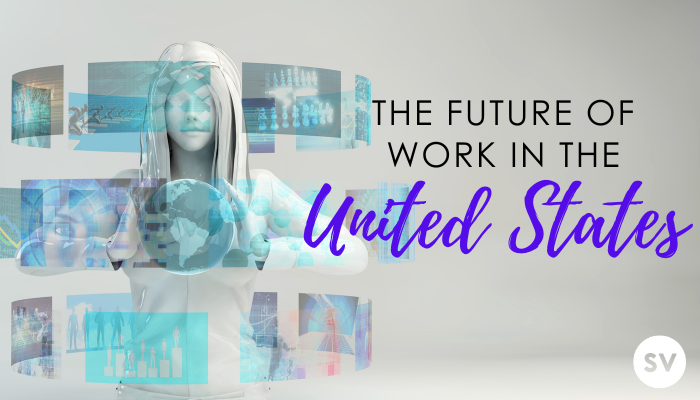
According to the US Census, in this country 90 percent of workers were farmers in 1790; less than 2 percent are today. In just that statistic alone, we can see that we’ve moved significantly out of manual work and toward more mental and emotional work. And pretty soon the majority of our manual jobs will be taken over by artificial intelligence, robots, and automation.
It’s predicted that up to 45 percent of jobs today will be automated out of existence in only twenty years, and twenty million manufacturing jobs globally will be replaced in the next ten years. It is also estimated that, globally, between four hundred million and eight hundred million individuals could be displaced by automation and need to find new jobs by 2030.¹
To many that may seem scary; to me that seems like a transformative evolution! The more that artificial intelligence takes over mundane tasks, the greater possibility there is for us humans to let go of work that doesn’t require our mind, heart, and spirit to be activated. And that’s the thing—AI may be able to model our minds, but it cannot take on the qualities of our heart and spirit. So those are the greatest muscles to strengthen alongside our minds.
Don’t get me wrong—there are plenty of manual labor careers that are purpose driven and incredibly fulfilling. This is by no means a knock on certain jobs or looking down on work that can be replaced by a robot. Personally, I am on a quest to follow in my great uncle’s footsteps and become a woodworking cowgirl. My vision is to open a retreat center in the mountains of Idaho while building furniture and art with my hands and helping to work the range on horseback with my cattlemen community out there. Every time I take on that type of physical work, I end my day with complete contentment, gratitude, and desire for more. I imagine that’s how many people are when it comes to seeing the fruits of their physical labor. It all depends on the individual and the environment they have to either survive or thrive in. In other words: the quality of their culture.
Some cultures will prioritize transferable skills and development for their team members who will be faced with AI replacements. Others will let an entire team go at the drop of a hat to save a few dollars. Some cultures will intentionally plan for outsourced AI support while others will go out of business for not considering it. Some cultures will double down on their investments in human skills while others will pretend that they are consequential, losing potentially their greatest differentiator.
Just a few years ago, I hired my first administrative assistant, who books, confirms, and reschedules all my appointments. And guess what? She’s a robot! I was skeptical at first, but after witnessing the precision, accuracy, and consistency of “her” support each month, it was apparent that my investment in that intelligence was more cost effective and simpler than if I had hired a human. What pushed me over the top was when my grandfather died and I reached out to my AI assistant, Clara, to tell her that I needed all my meetings postponed for the week and to let them know that I had a death in my family. Within an hour, everything had been rescheduled and I was receiving condolences from the people whose meetings with me were affected. It was a moment of realizing how dynamic and reliable my AI was. Could a human have done it? Absolutely. But did I need a human to do it? Absolutely not.
So this is where we’re going: all the work that doesn’t require emotional intelligence will be outsourced, and everyone who decided that emotional intelligence was just some hippie-dippie thing will be left behind in a big way.
We are evolving for the better. We are shedding the layers of what does not serve us as a human species and stepping into a greater possibility for tomorrow.
With all that evolution, there are some things that have never changed and will never change. As human beings, we are wired to crave a sense of purpose, connection, and belonging. There is no new software or latest gadget that is going to replace that.
Perhaps it can enhance it, but it can never replace it. We feel it on a cellular level, and we know in our hearts and souls when it is real. There is no substitute for these human needs in creating a meaningful life.
Attaining a sense of purpose, connection, and belonging can feel incredibly daunting and overwhelming for most people—most people! So many leaders feel lost when it comes to emotional intelligence. There are myriad methods, theories, and tools to choose from in developing your emotional intelligence repertoire. I encourage you to keep exploring them until you discover what unshakably resonates with you.
This is an excerpt from MaryBeth’s new book: Permission to Be Human: The Conscious Leaders Guide to Creating a Values-Driven Culture.
Want to learn how you can develop your emotional intelligence skills more? Check out MaryBeth’s conscious leadership book here.